Table of Contents
If you’ve ever experienced the persistent ringing, buzzing, or humming sounds of tinnitus, you know how frustrating it can be. While many people turn to medical interventions, an increasing number are exploring massage therapy for tinnitus as a complementary approach to managing their symptoms. But does it actually work? In this article, we’ll explore the connection between massage and tinnitus, examining the science, techniques, and practical considerations that can help you decide if this natural remedy is right for you.
What You’ll Discover
By the end of this guide, you’ll understand how massage therapy may influence tinnitus symptoms, which specific techniques show the most promise, and how to integrate this approach safely into your wellness routine. We’ll also separate fact from fiction, helping you set realistic expectations about what massage can and cannot do for your ear ringing.
Understanding Tinnitus: The Basics
Tinnitus affects more than 740 million adults globally, manifesting as phantom sounds that originate not from external sources but from within the auditory system itself. Common causes include:
- Noise-induced hearing damage from prolonged exposure to loud environments
- Age-related hearing loss affects the delicate structures of the inner ear
- Neck and jaw tension that impacts nerves connected to the auditory system
- Stress and anxiety, which can amplify the perception of tinnitus
- Temporomandibular joint (TMJ) disorders create pressure near the ear canal
- Cardiovascular issues affecting blood flow to the ears
While tinnitus itself isn’t a disease, it’s often a symptom of an underlying condition. This is precisely why holistic approaches like massage for tinnitus have gained attention; they address some of the contributing factors rather than just the symptom itself.
What Is Massage Therapy?
Massage therapy is the systematic manipulation of soft tissues, muscles, tendons, ligaments, and fascia to promote healing, relaxation, and improved function. Professional massage therapists employ a range of techniques, from gentle stroking to deep pressure, to achieve specific therapeutic objectives.
Common Types of Therapeutic Massage
| Massage Type | Primary Focus | Typical Benefits |
|---|---|---|
| Swedish Massage | Relaxation and circulation | Stress reduction, muscle loosening |
| Deep Tissue | Chronic muscle tension | Breaking up scar tissue, releasing knots |
| Trigger Point | Specific pain points | Relief from referred pain patterns |
| Craniosacral | Nervous system and skull | Gentle tension release, nervous system calming |
| Myofascial Release | Fascia and connective tissue | Improved range of motion, pain relief |
The Rope Analogy
Think of muscle tension like a tightly knotted rope. When muscles are contracted and tense, they restrict blood flow and nerve signaling, much like a knot in a rope prevents smooth movement through a pulley system. Massage therapy works to “untie” these knots, allowing for better circulation, reduced pressure on nerves, and restored normal function. This principle becomes especially relevant when we consider massage and tinnitus, as tension in the neck, jaw, and shoulder muscles can directly impact the auditory system.
How Massage Therapy May Help Tinnitus
While massage won’t regenerate damaged hair cells in the inner ear or reverse permanent hearing loss, it can address several factors that contribute to tinnitus severity:
1. Reducing Muscle Tension in Critical Areas
Tight muscles in the neck, shoulders, and jaw can compress blood vessels and nerves that serve the auditory system. The cervical spine (neck) and temporomandibular joint (TMJ) are particularly significant, as they share neural pathways with the inner ear. When these areas are chronically tense, they can trigger or worsen tinnitus symptoms.
2. Improving Blood Circulation
The inner ear requires adequate blood flow to function optimally. Massage therapy increases circulation in treated areas, potentially delivering more oxygen and nutrients to the structures involved in hearing. Improved blood flow may also help remove metabolic waste products that could contribute to inflammation.
3. Stress and Anxiety Reduction
Here’s a critical connection: stress doesn’t cause tinnitus, but it almost always exacerbates it. When you’re stressed, your body enters a heightened state of alertness, amplifying your perception of internal sounds. Massage therapy activates the parasympathetic nervous system, your body’s “rest and digest” mode, which can:
- Lower cortisol levels
- Reduce muscle tension throughout the body
- Improve sleep quality
- Create a sense of calm that helps you cope with tinnitus more effectively
4. Nervous System Regulation
The autonomic nervous system plays a significant role in how we perceive tinnitus. Massage therapy has been shown to modulate nervous system activity, potentially reducing the hyperactivity in auditory pathways that contributes to phantom sounds.
Types of Massage Therapy Used for Tinnitus
Not all massage approaches are equally relevant for tinnitus management. Here are the techniques that show the most promise:
4.1 Neck and Shoulder Massage
Why it matters: The cervical spine houses nerves that communicate with the auditory system. Tension in the neck muscles (particularly the sternocleidomastoid and upper trapezius) can compress these nerves and blood vessels.
What to expect: A therapist will work on releasing tight muscles along the sides and back of your neck, as well as your shoulders. This may include kneading, sustained pressure, and gentle stretching.
Best for: Tinnitus that worsens with poor posture, desk work, or neck strain.
4.2 Jaw (TMJ) Massage
Why it matters: The temporomandibular joint sits just in front of the ear canal. TMJ disorders affect up to 12% of the population and are strongly associated with tinnitus. Research published in Frontiers in Neuroscience shows that the prevalence of tinnitus in patients with TMJ disorders reaches 60%, compared to 15-30% in patients without TMJ dysfunction.
What to expect: Internal and external massage of the jaw muscles (masseter, temporalis, pterygoids). This work can be intense, but it should never be painful.
Best for: Tinnitus accompanied by jaw clicking, pain, or teeth grinding (bruxism).
4.3 Craniosacral Therapy
Why it matters: This extremely gentle approach focuses on the subtle movements of the cranial bones and the flow of cerebrospinal fluid. While scientifically controversial, many practitioners report success with tinnitus patients.
What to expect: Very light touch on the head, neck, and sacrum. Sessions are deeply relaxing and work with the body’s natural rhythms.
Best for: Stress-related tinnitus or when a gentle, non-invasive approach is preferred.
4.4 Trigger Point Therapy
Why it matters: Trigger points are hyperirritable spots in muscles that can refer pain and symptoms to other areas. Several trigger points in the neck and jaw are known to refer symptoms to the ear region.
What to expect: Sustained pressure on specific points, which may be temporarily uncomfortable but should lead to relief.
Best for: Tinnitus with a clear muscular component or that started after an injury.
What Science Says About Massage Therapy for Tinnitus
The research on massage therapy for tinnitus is still emerging, but several studies offer encouraging insights:
Clinical Observations:
- Research examining cervical and masticatory muscle treatment found that patients receiving targeted massage therapy reported significant reductions in tinnitus severity scores.
- Studies on TMJ-related tinnitus consistently show that treating jaw dysfunction, often including massage, can reduce ear symptoms in 40-70% of cases.
- Multiple studies confirm that reducing muscle tension in the head, neck, and shoulders correlates with decreased tinnitus intensity.
- According to the American Academy of Otolaryngology-Head and Neck Surgery Foundation’s clinical practice guidelines, comprehensive evaluation and management of tinnitus should address underlying musculoskeletal factors that may contribute to symptoms.
Important Considerations:
- Most research involves small sample sizes and would benefit from larger, controlled trials
- Results vary significantly between individuals based on the underlying cause of their tinnitus
- Massage appears most effective when tinnitus is related to musculoskeletal issues rather than pure auditory damage
- Benefits are generally temporary without consistent treatment
The consensus among researchers is that while massage therapy for tinnitus isn’t a cure, it can be a valuable tool for symptom management, particularly when combined with other interventions.
Who May Benefit Most from Massage Therapy
Massage therapy isn’t universally effective for all tinnitus cases. You’re most likely to experience benefits if you have:
Stress-Related Tinnitus. If your tinnitus worsens during periods of high stress or improves when you’re relaxed, massage therapy can be particularly helpful by activating your relaxation response.
Musculoskeletal Tinnitus Also called somatosensory tinnitus, this type is linked to:
- Chronic neck strain or whiplash injuries
- Poor posture from desk work or device use
- Recent jaw trauma or dental work
- Muscle tension from physical labor
TMJ-Associated Tinnitus: If you experience jaw pain, clicking, limited opening, or teeth grinding alongside your tinnitus, addressing TMJ dysfunction through massage may provide relief.
Tension Headache Sufferers: The overlap between tension headaches and tinnitus is significant. If you regularly experience both, massage targeting trigger points may help both conditions.
How Often Should Massage Be Done?
Consistency is key when using massage for tinnitus management. Here’s a general framework:
Professional Massage Sessions
Initial phase (weeks 1-4):
- 1-2 sessions per week
- Focus on identifying tension patterns and responsive areas
- Allow time for the body to adjust to treatment
Maintenance phase (ongoing):
- Every 2-4 weeks, depending on symptom severity
- Adjust frequency based on results and budget
- More frequent sessions during stress periods
Self-Massage Practice
Daily self-massage, even for 5-10 minutes, can complement professional treatment and extend its benefits. Think of it like brushing your teeth. Regular maintenance prevents problems from building up.
Realistic expectations: Some people notice improvements within days, while others need several weeks of consistent treatment. Massage and tinnitus management is a process, not a quick fix.
Self-Massage Techniques You Can Try at Home
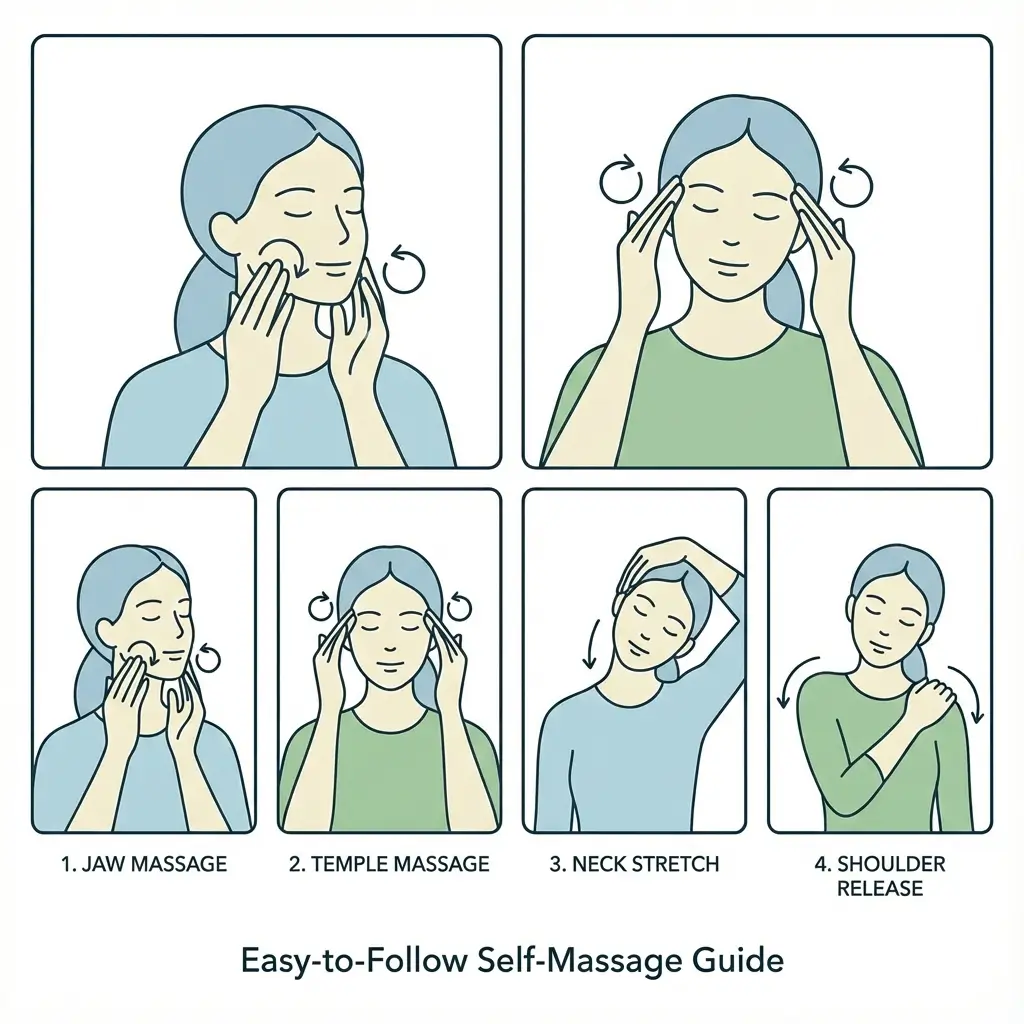
Professional massage therapy can be expensive, but you can learn effective techniques to practice at home:
Neck and Shoulder Relaxation
- Neck rolls: Slowly roll your head in circles, 5 times each direction
- Shoulder shrugs: Lift shoulders toward ears, hold 5 seconds, release completely
- Neck stretch: Gently tilt head toward shoulder, hold 15-30 seconds on each side
- Finger pressure: Use fingertips to apply gentle circular pressure along the base of your skull
Jaw and Facial Muscle Release
- Masseter massage: Place fingers on jaw muscles (just below cheekbones), apply gentle circular pressure for 1-2 minutes
- Temple circles: Use fingertips to massage temples in slow circles
- Jaw stretches: Open mouth wide, move jaw side to side, then in circles
- Inside mouth work: (wash hands first) Use your thumb to gently massage the inside cheek muscles
Safety Tips for Self-Massage
Important precautions:
- Never apply excessive pressure that causes sharp pain
- Avoid massaging directly over the carotid arteries (front of neck)
- Stop immediately if symptoms worsen
- Be especially gentle around the jaw and temples
- Stay hydrated after massage sessions to help flush toxins
- Don’t massage areas with open wounds, rashes, or acute inflammation
Safety, Risks, and When to Avoid Massage
While massage therapy is generally safe, certain situations require caution:
When to Avoid or Modify Massage
- Active infections in the treatment area
- Recent surgery (wait for complete healing)
- Severe osteoporosis (risk of fracture)
- Blood clotting disorders or taking blood thinners
- Unexplained pain that hasn’t been medically evaluated
- Skin conditions in the treatment area
- Pregnancy (certain techniques should be modified)
Warning Signs to Stop Treatment
Stop immediately and consult a healthcare provider if you experience:
- Sudden increase in tinnitus intensity that doesn’t resolve
- Dizziness, vertigo, or balance problems
- Sharp, stabbing pain
- Numbness or tingling that spreads
- Visual disturbances
- Severe headache
Massage Therapy vs Other Natural Tinnitus Approaches
Massage therapy is just one tool in the natural tinnitus management toolkit. Here’s how it compares:
Complementary Natural Approaches
| Approach | Primary Benefit | How It Compares to Massage |
|---|---|---|
| Yoga and Stretching | Posture, flexibility, stress reduction | Great companion to massage; addresses similar tension patterns |
| Acupressure | Targeted pressure point stimulation | Similar to trigger point massage, but based on Traditional Chinese Medicine |
| Sound Therapy | Masking tinnitus, retraining brain response | Addresses different aspects; combines well with massage |
| Meditation/Mindfulness | Stress reduction, perception change | Excellent complement; enhances relaxation benefits |
| Dietary Changes | Reducing inflammation, managing triggers | Works on a different pathway; worth combining |
Why a Combined Approach Often Works Best
Tinnitus is rarely caused by a single factor, so addressing it from multiple angles makes sense. A holistic tinnitus care plan might include:
- Massage therapy for muscle tension and circulation
- Sound therapy for symptom masking and habituation
- Stress management through meditation or counseling
- Sleep hygiene improvements
- Dietary modifications if food triggers are identified
- Hearing protection to prevent further damage
This multi-pronged strategy acknowledges that tinnitus affects your whole system, physical, neurological, and emotional.
Read Also: 7 Acupressure Points for Tinnitus Relief Symptoms
Conclusion: A Realistic Perspective on Massage and Tinnitus
The bottom line: While massage therapy for tinnitus won’t work miracles, it offers genuine benefits for many people particularly those whose symptoms are linked to muscle tension, poor posture, TMJ dysfunction, or chronic stress. The key is approaching it with realistic expectations and integrating it into a comprehensive tinnitus management plan.
Key Takeaways
- Massage therapy addresses contributing factors to tinnitus rather than the root auditory cause
- Benefits are most significant for musculoskeletal and stress-related tinnitus
- Consistency matters; regular sessions provide better results than sporadic treatment
- Combining massage with other natural approaches creates a more robust management strategy
- Professional guidance ensures safety and maximizes effectiveness
- Self-massage techniques can extend the benefits between professional sessions
Your Next Steps
If you’re considering massage therapy for your tinnitus:
- Get properly diagnosed by an audiologist or ENT specialist
- Find a qualified massage therapist with relevant experience
- Start with 4-6 sessions over several weeks to assess effectiveness
- Learn self-massage techniques to practice between sessions
- Track your symptoms to identify patterns and progress
- Be patient: natural approaches take time to show benefits
- Keep an open mind about combining multiple strategies
Remember, managing tinnitus is rarely about finding a single solution. It’s about building a toolkit of strategies that work together to reduce symptom severity and improve your quality of life. Massage therapy can be a valuable part of that toolkit, relaxing, non-invasive, and potentially quite effective when applied correctly.
What matters most isn’t finding a cure, but discovering what helps you live well despite tinnitus. For many people, that includes the healing touch of therapeutic massage.
FAQ
Can massage therapy cure tinnitus?
No, massage therapy cannot cure tinnitus, especially if it’s caused by permanent inner ear damage or hearing loss. However, it can significantly reduce symptom severity for many people, particularly when tinnitus is linked to muscle tension, stress, or TMJ issues. Think of massage as a management tool rather than a cure.
How long does it take to see results?
Results vary widely. Some people notice immediate relaxation and a temporary reduction in symptoms after their first session. Others may need 4-6 weeks of consistent treatment before experiencing significant benefits. The key is consistency; sporadic sessions are less effective than regular treatment.
Can massage make tinnitus worse?
In rare cases, overly aggressive massage or work on sensitive areas could temporarily increase symptoms. This is why it’s crucial to work with an experienced therapist and communicate clearly about what you’re feeling. Properly administered massage should never cause lasting harm. If symptoms worsen and don’t improve within 24-48 hours, discontinue treatment and consult your healthcare provider.
Is massage safe for all types of tinnitus?
Massage is generally safest and most effective for musculoskeletal or stress-related tinnitus. For other types, such as tinnitus from Meniere’s disease, acoustic neuroma, or severe hearing loss, massage likely won’t address the underlying cause, though it may still help with stress management. Always get a proper diagnosis before starting treatment.
Do I need a special type of massage therapist?
While any licensed massage therapist can provide basic relaxation, you’ll get better results from someone who
has experience treating tinnitus or TMJ disorders
Should I stop other tinnitus treatments if I try massage?
Absolutely not. Massage should complement, not replace, other evidence-based treatments your doctor has recommended. Continue with hearing aids, sound therapy, counseling, or medications as prescribed, and view massage as an additional support tool.